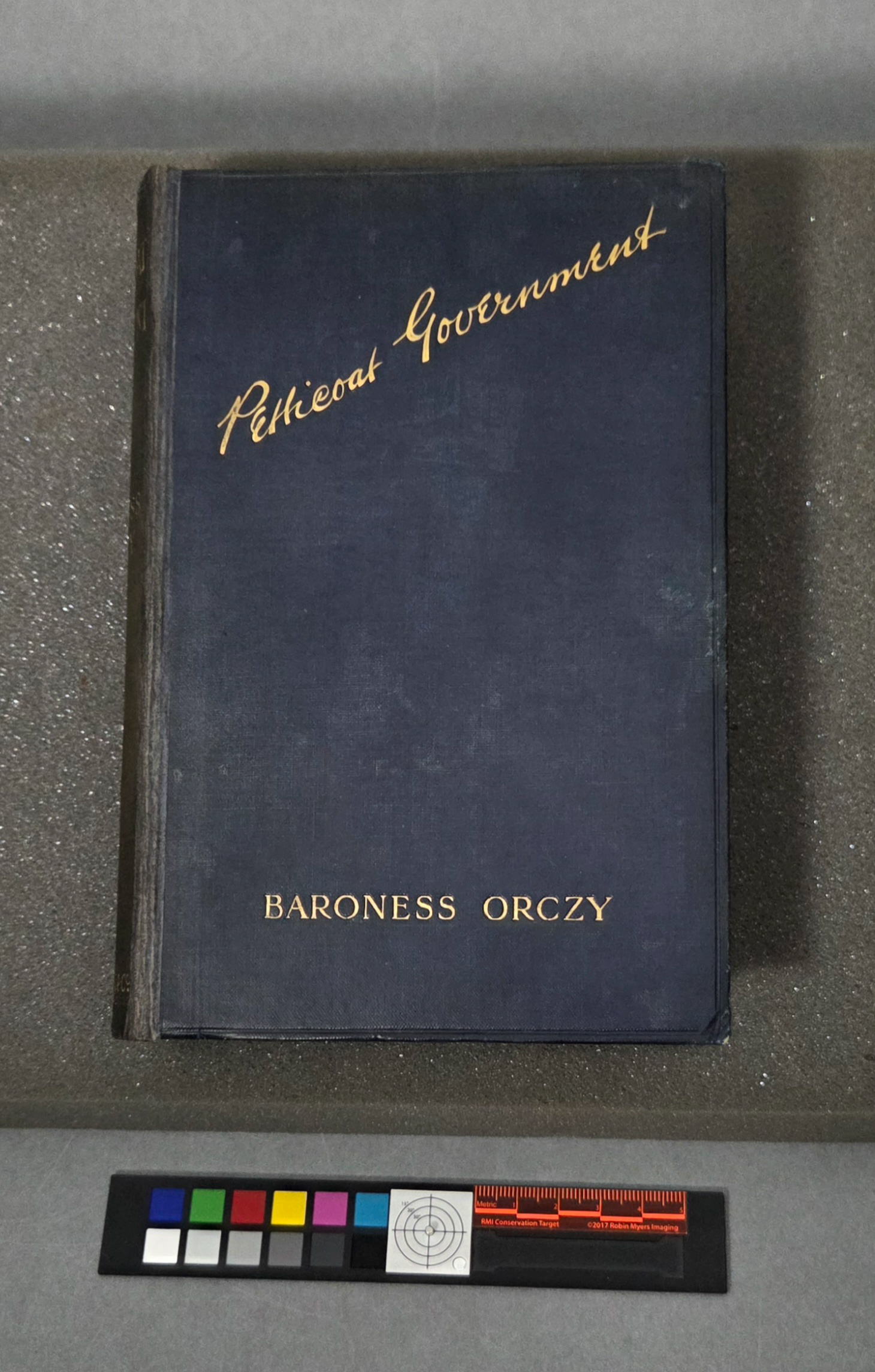
Petticoat Government

Condition on acceptance

Project type: Cloth Re-back
An interventive treatment method for increasing structural stability and functionality to a book bound with a cloth covered case. 
About the object: A first edition publication of the 1910 novel Petticoat Government by Baroness Orczy. Believed to have been in a personal collection, as there are no ex libris labels or bookplates. 
Condition on acceptance: The joints were damaged and the case was detached from the textblock. Within the textblock, there was split sewing, a loose leaf, and a missing endleaf with a skinned tear loss on the pastedown.
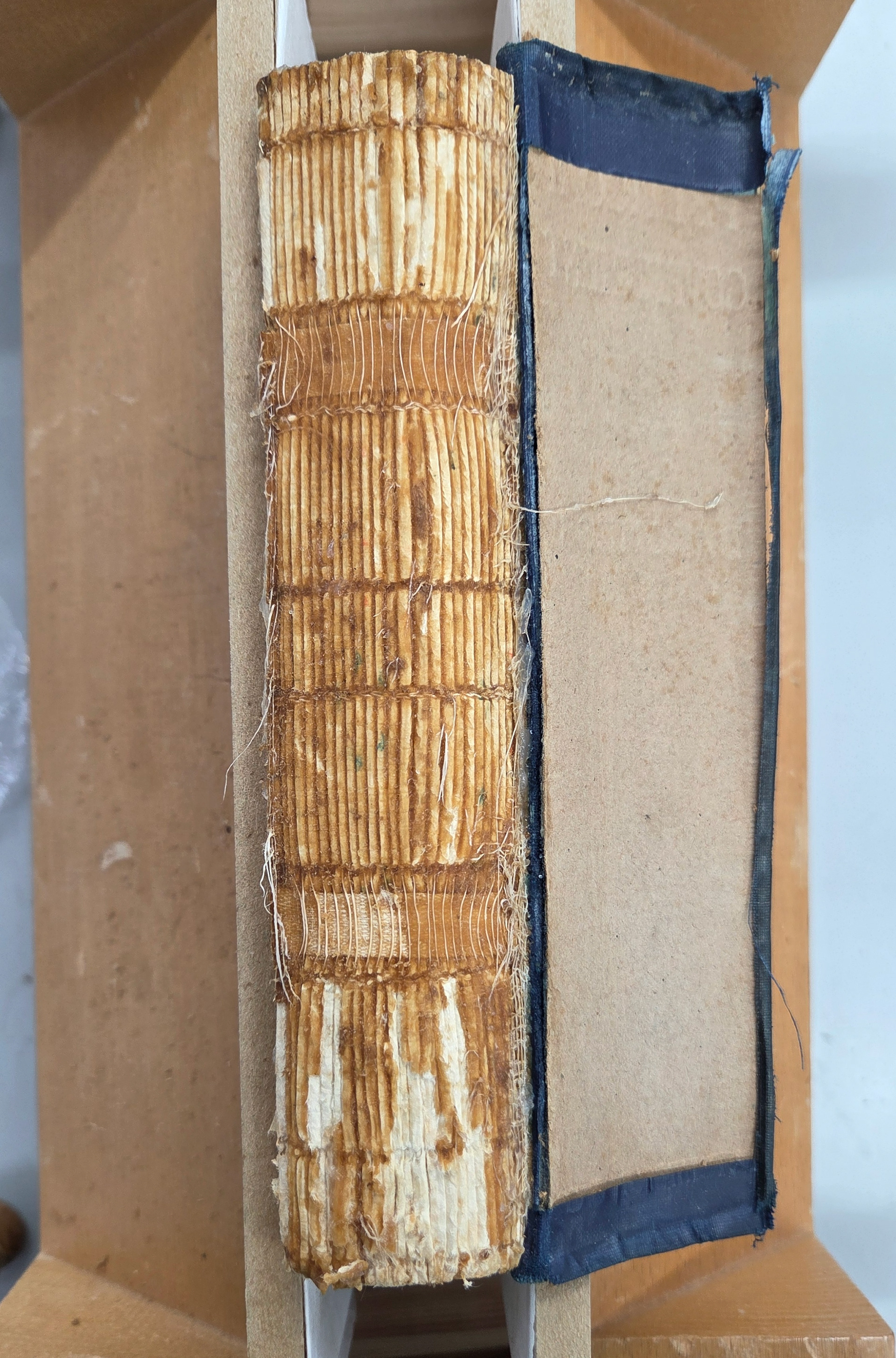
The first process was mechanically removing the original spine lining. These included a heavy coating of animal glue, thin woven mull fibers, and deeply acidified paper over top. These materials were cleaned away by scraping away the outermost layers until a more delicate area was reached. 
Removal was continued by applying poultices of wheat starch paste. This allowed moisture to slowly permeate into the animal glue, softening and reactivating it. After this, it could be carefully removed from the signatures using small tools. 
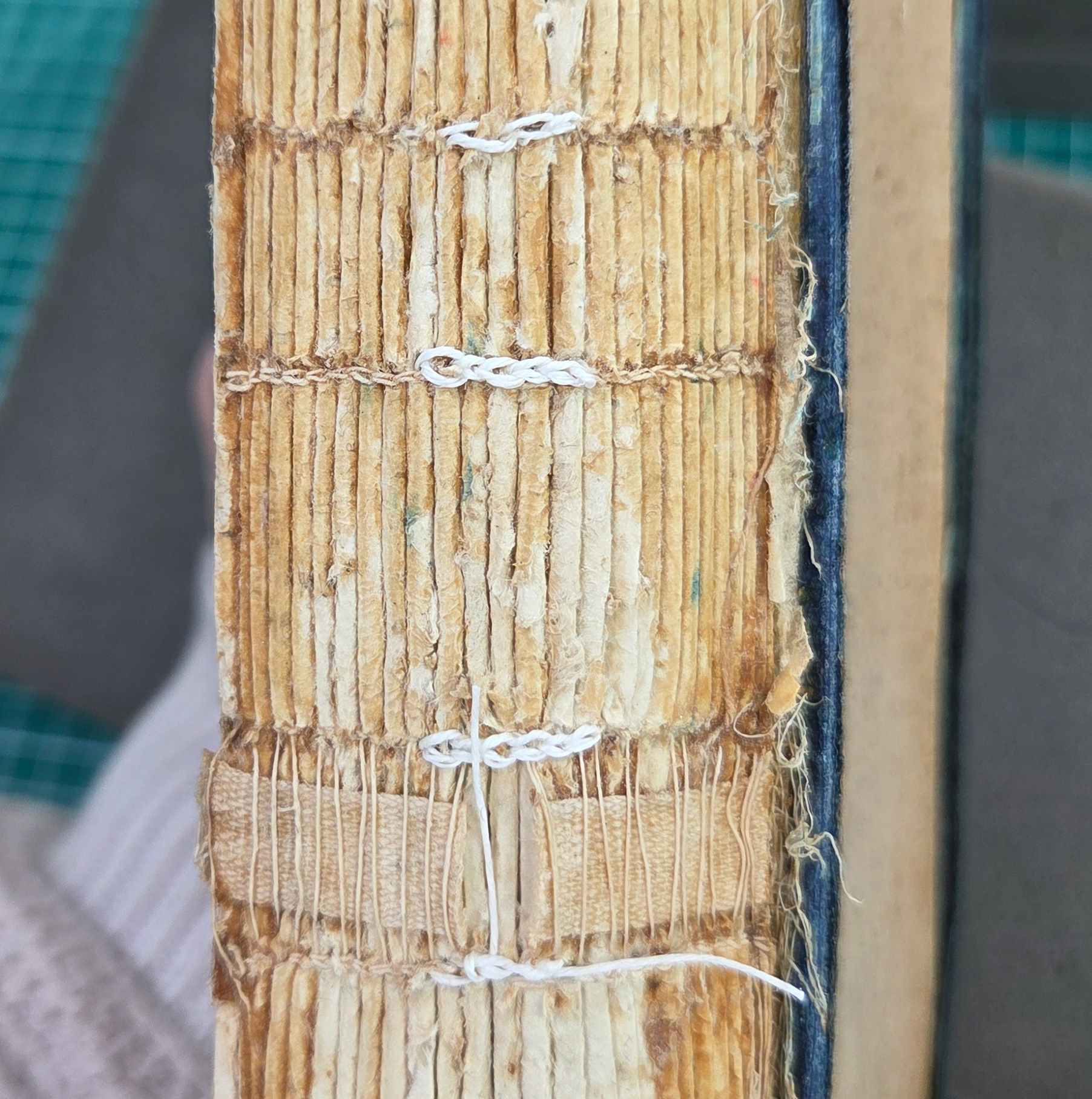
Extra attention was given to clearing the areas immediately around sewing stations, as well as in the depressed areas between signatures. Clearing these areas made it possible to access areas within the textblock that needed further interventive treatments. 

Mechanical spine lining removal

Detail of cleaned textblock with localized sewing repair
Textblock repairs

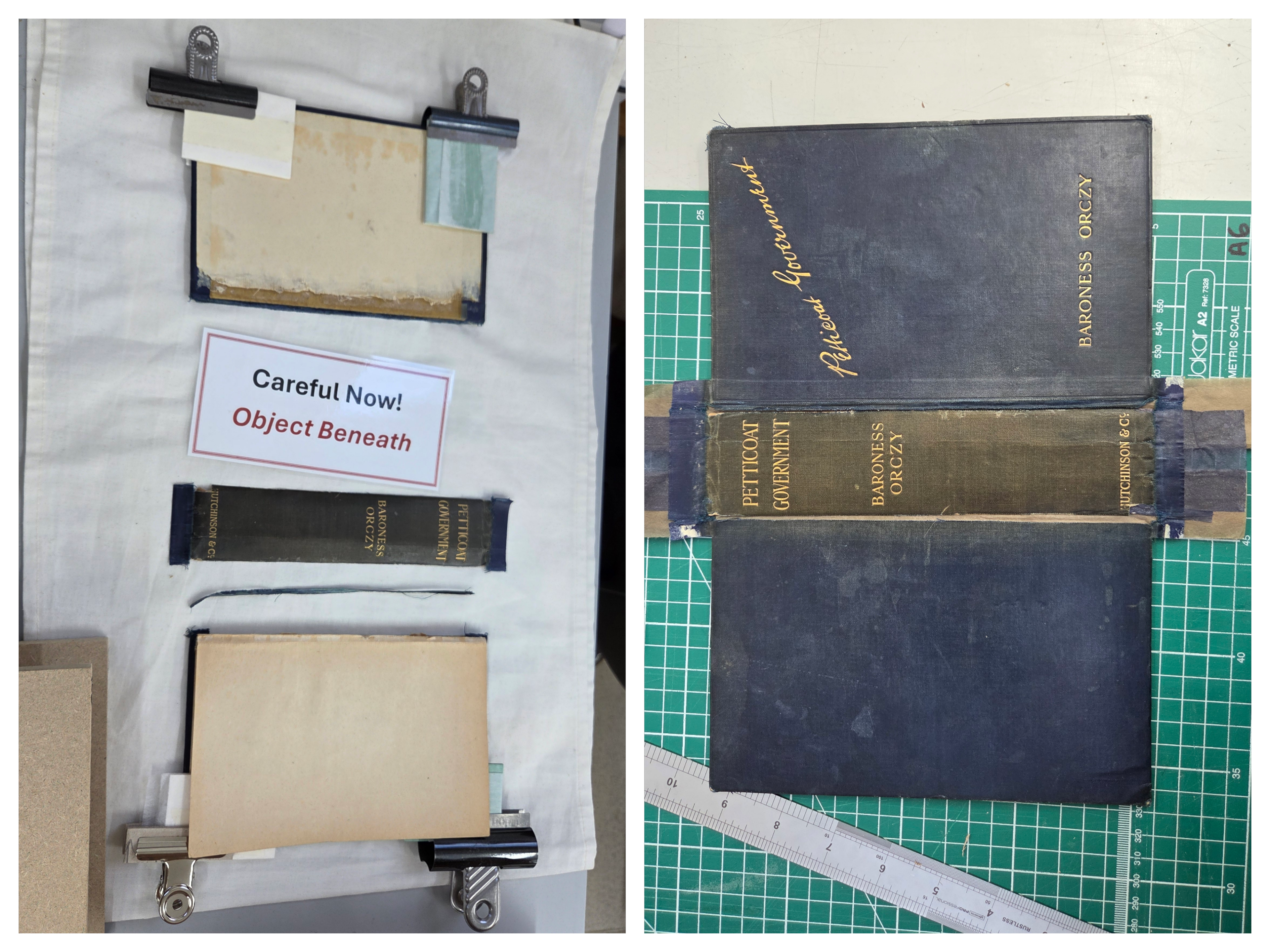
Case consolidation and reconstruction
Case Repairs
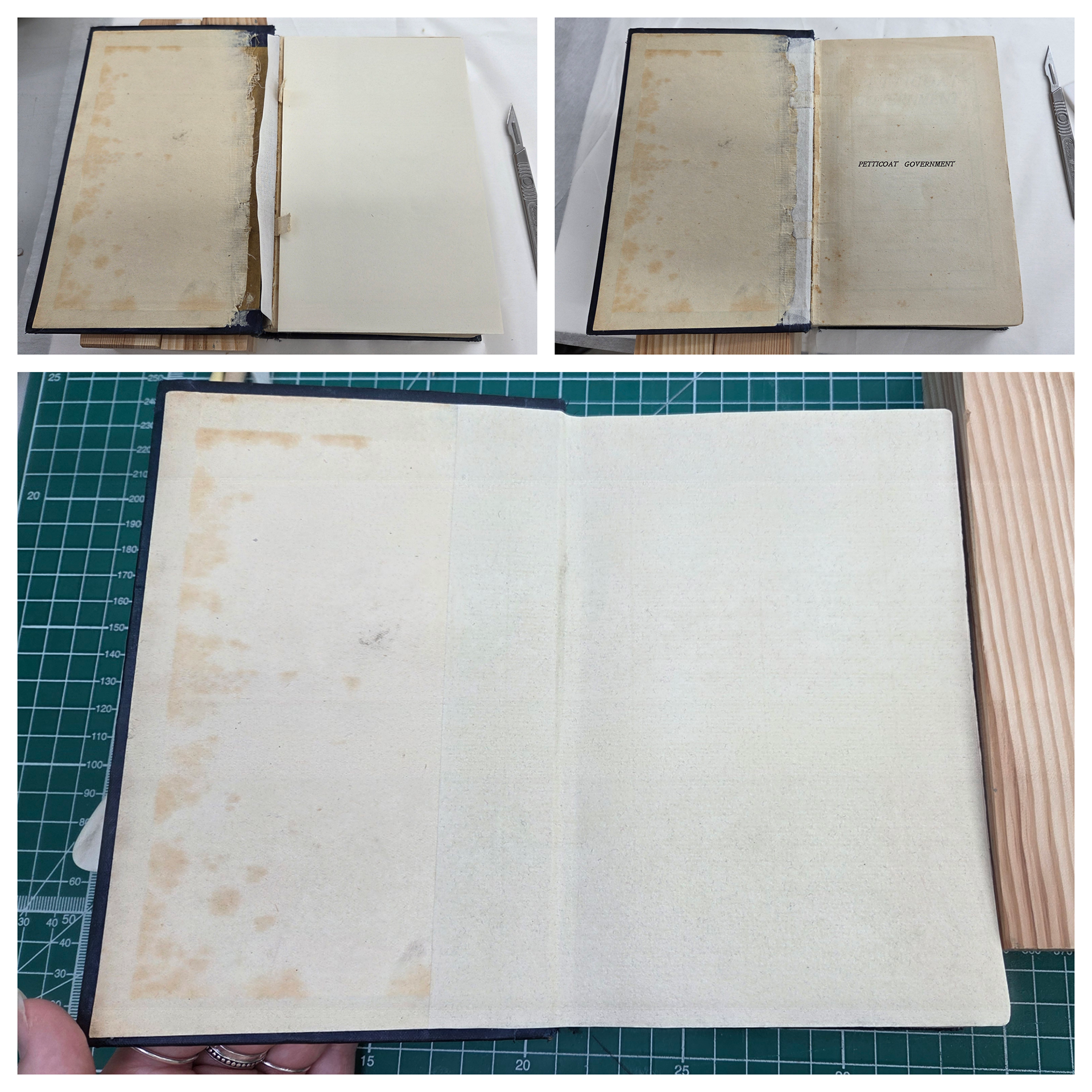
Replacement of a lost endleaf

Stages of replacing a lost endleaf

Condition following treatment

The final decision I made while treating this object was to add a minimal exterior reinforcement to the joints of the case. The original material in this area had become deeply damaged and the majority of it had been lost before I began to treat it. 
The new spine lining and tissue used to repair the case had greatly increased the joints' strength and functionality, but the damage in this area of the case had left very vulnerable edges to the original material. It was determined that if these edges were left exposed, they posed enough concern of future damage that a visible tissue repair on the external side of the joint was reasonable. 
This method can be known as an Etherington Hinge Repair. Approximately 4 mm of toned Japanese tissue was applied to both joints using EVA adhesive for its flexibility and durability. The color of these materials was carefully adjusted to reflect the existing color of the spine and covers.
Back to Top